
Even on days when sleep feels sound and your routine looks balanced, there can still be a lingering sense of being “wired but tired.” You wake up feeling like you’ve rested, yet your body doesn’t fully agree. This experience is often linked to a dysregulated nervous system.
Across the United States, millions of people live in this constant state of high alert, often mistaking it for simple burnout or everyday stress. But it’s a hidden pattern where your body loses the ability to shift smoothly between high-gear action and true calm. Most people miss the signs because they happen so gradually that 'feeling off' becomes the new normal.
We’ve spent years identifying these exact patterns and helping people regain control. To help you out, we also created this guide to tell you the signs, explain the causes, and give you the roadmap to feeling like yourself again.
What Is a Dysregulated Nervous System?
A dysregulated nervous system is a state where the body cannot properly switch between stress (fight-or-flight) and relaxation (rest-and-digest). This causes it to remain stuck in survival mode even when there is no real threat.
According to Dr. Stephen Porges, a neuroscientist and developer of the Polyvagal Theory, the core of this process is captured precisely: the autonomic nervous system continuously evaluates safety and threat, even when the conscious mind is unaware of it.
Actually, your nervous system controls all your movements. Your heart rate, digestion, breathing, immune response, and the entire stress-response system. To run it properly, the nervous system drives its operations to three branches, with the autonomic nervous system (ANS) playing the central role in regulation.
The ANS has two modes. The sympathetic nervous system activates fight-or-flight. It floods the body with cortisol and adrenaline, speeds the heart, sharpens attention, and prepares you for threat. The parasympathetic nervous system does the opposite; it slows everything down, promotes digestion, lowers heart rate, and allows genuine recovery.
Why Your Nervous System Gets Stuck (The Science Behind It)
Your nervous system gets used to staying in high-alert mode and becomes reluctant to shift back into calm, even when the situation is completely normal. This happens because your nervous system is built to learn.

Every time stress activates the sympathetic response and that response goes unresolved, the pattern reinforces itself. Cortisol and adrenaline keep circulating. The brain receives feedback that the environment is still dangerous, so it stays alert. Over time, this loop becomes the default, not because something is wrong with your body, but because your body has become very good at protecting you.
Several everyday patterns push the nervous system into this state and keep it there:
Chronic stress: When stress arrives repeatedly without resolution, the body stops expecting recovery. The elevated state eventually stops feeling like stress and starts feeling normal.
Childhood experiences: A nervous system that develops inside instability, neglect, or chronic unpredictability wires itself around hypervigilance. That wiring persists into adulthood even when the original circumstances are long gone.
Poor sleep: Deep sleep is when cortisol clears, and the brain resets its sense of safety. When sleep is consistently disrupted, that recalibration never fully happens, and the system carries activation forward into the next day.
Digital overload: The average American adult spends over 7 hours per day on screens. Every notification and every piece of negative news activates a small threat response.
Nutritional patterns: Blood sugar instability creates cortisol spikes that mimic threat responses. Magnesium deficiency, common in the American diet, impairs GABA production, the brain's primary calming signal.
Lack of genuine rest: Passive screen time and constant task-switching are not conducive to recovery. The nervous system needs periods of low stimulation to practice returning to baseline.
You Might Have a Dysregulated Nervous System If…
Before explaining the full symptom picture, here is a quick self-identification check.
You feel tired but cannot relax
Small things knock you off balance faster than they should
Social interaction leaves you depleted for hours afterward
You reach for your phone not out of boredom but to escape a discomfort you cannot name
You feel anxious without a clear trigger
If any of these feel familiar, there is a good chance your nervous system has been running in overdrive for longer than you realize. The pattern is treatable, and most people see a real shift once they understand what is actually driving it. The practitioners at the Center for Infinite Transformation work with this regularly. If you want clarity on what your symptoms are pointing to, a session is a practical next step.
Schedule a Session with Our Experts
4 Ways a Dysregulated Nervous System is Quietly Draining Your Energy
A dysregulated nervous system goes far beyond standard fatigue or everyday tension. It’s a full-spectrum physical and mental experience. If you’re wondering whether your body is stuck in a cycle of dysregulation, look for these key indicators below
Physical Symptoms
Chronic fatigue, headaches, and muscle tension in your shoulders, neck, and chest are clear signs of a dysregulated nervous system. In this state, your body stays in "low-grade activation," which means you burn through energy reserves even when you are resting.
You may also experience gut issues like IBS, nausea, bloating, or irregular digestion. These problems emerge directly from nervous system dysregulation. Your gut contains more neurons than your spinal cord and reacts to your nervous system in real time. When your "stress" system dominates, your body suppresses digestion, leading to these physical symptoms.
Emotional Symptoms
Anxiety without a clear cause is a major symptom of a dysregulated nervous system. You might also feel irritability that seems way too strong for the situation. This happens because your nervous system is already at its limit.
Emotional dysregulation means your feelings are bigger, faster, and harder to calm down than they should be. This occurs because the part of your brain responsible for rational thinking. The prefrontal cortex gets skipped when your "threat response" is already active. Essentially, your brain is reacting to a danger that isn't there, making it hard to stay balanced.
Cognitive Symptoms
Brain fog is one of the most commonly searched and least understood symptoms. Central nervous system overload consumes cognitive resources. Memory consolidation degrades. Focus narrows or scatters. Many people pursuing ADHD evaluations are actually describing nervous system dysregulation; the mechanisms overlap, but the root cause differs.
Behavioral Symptoms
Avoidance of casual activities, like canceling plans, putting off tasks, or withdrawing from commitments, is how an overwhelmed system tries to survive. It is a behavioral output designed to reduce the demands on your energy.
"Doom scrolling" is another common sign. It keeps your brain in a low-level stress response that, surprisingly, feels more manageable than sitting with real discomfort or boredom.
Hidden Signs of a Dysregulated Nervous System Most People Miss
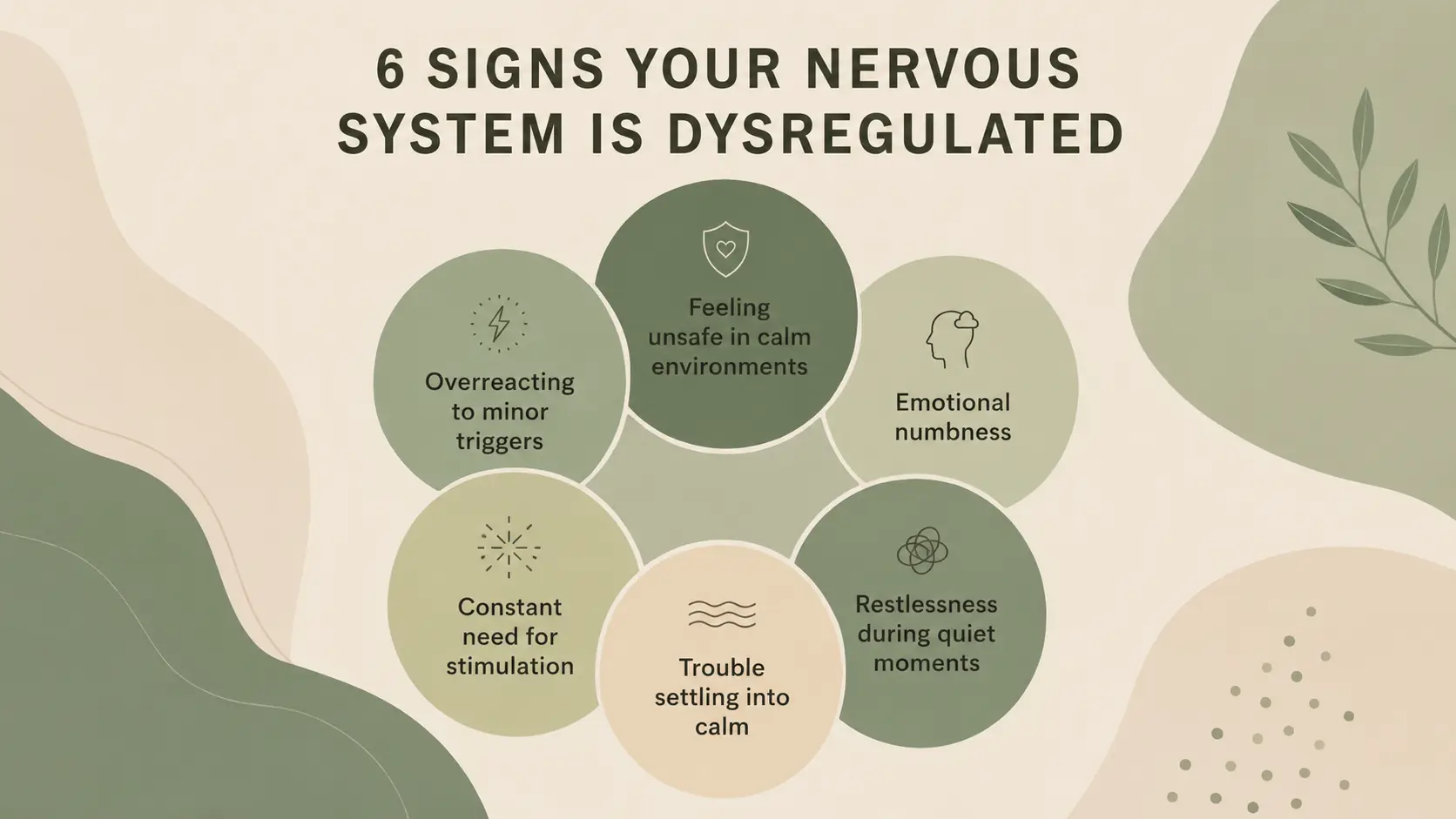
The overlooked presentations are the ones that keep people stuck.
Feeling unsafe in genuinely calm environments. When the nervous system has been conditioned to threat, safety itself becomes unfamiliar and therefore uncomfortable. People describe this as a vague restlessness during vacations.
Overreacting to minor triggers. A slight tone of voice. A change in plans. A crowded grocery store. The reaction is not the problem, the threshold is. The nervous system is already close to its limit, so small inputs push it over.
Emotional numbness and freeze states. Dysregulation does not always look like high-strung anxiety. In the freeze or shutdown response. The nervous system moves in the opposite direction: numbness, disconnection, flat affect, reduced motivation, and a sense of watching life from behind glass.
Needing constant stimulation. The inability to sit in silence, the compulsive checking, the need for background noise. These reflect a nervous system that has lost its tolerance for parasympathetic states.
This is why many people keep searching for ways to reduce stress naturally and never find sustained relief. They are addressing symptoms without addressing the underlying state.
Types of Nervous System Dysregulation
Dysregulation is not actually a single term; it comes with many different layers. Here are the names and their descriptions:
Hyperarousal (Fight/Flight)
This is the high-activation state most people associate with stress and anxiety. The sympathetic system is dominant, cortisol remains elevated, and the body stays in a state of scanning for threat.
It presents as anxiety, panic responses, sleep-onset difficulties, physical tension, irritability, and a subjective sense of never being able to fully switch off. In the United States, this pattern is often misidentified as generalized anxiety disorder and treated primarily with medication, with variable results.
Hypoarousal (Freeze/Shutdown)
When the nervous system has been overwhelmed beyond its capacity, it can shift into a low-energy shutdown state. This presents as chronic fatigue, emotional numbness, difficulty making decisions, social withdrawal, and a flat or disconnected quality to daily experience.
Functional Freeze (High-Functioning Burnout)
This category is under-discussed and extraordinarily common, particularly in American professional culture. The person looks productive; they are meeting deadlines, maintaining relationships, and appearing functional. But internally, the system is in a sustained freeze.
They feel nothing most of the time, then crash. They get through the week and spend the weekend unable to move. This is not laziness. This is a nervous system that has been running on emergency reserves for so long that it has forgotten what baseline feels like.
Dysregulated Nervous System vs. Dysautonomia (Critical Distinction)
While these two terms are often used interchangeably, they represent different physiological states. Understanding the distinction is vital for choosing the right path to recovery.
How to Identify a Dysregulated Nervous System
Work through these markers honestly. The more that apply, the more likely dysregulation consistently is a central pattern.
Self-Assessment Checklist for Dysregulated Nervous System
If you resonate with more than four of these points, it is a strong indicator of a dysregulated nervous system:
Morning Fatigue: You wake up feeling exhausted regardless of how many hours of sleep you got.
Social Depletion: Social interactions leave you feeling completely drained rather than neutral or energized.
Heightened Reactivity: Small disruptions or minor inconveniences trigger disproportionately large emotional reactions.
Persistent Tension: You carry physical tightness in your neck, shoulders, or chest for most of the day.
Unprovoked Restlessness: You feel anxious or "on edge" even in environments that are objectively calm and safe.
Pervasive Overwhelm: You struggle to finish tasks, not because you are distracted, but because you feel a deep sense of being overwhelmed.
Unexplained Gut Issues: You experience frequent digestive symptoms (bloating, nausea, or IBS) without a clear dietary cause.
Sleep Disruptions: You have significant difficulty falling asleep, or you find yourself waking up frequently throughout the night.
When to See a Doctor
Seek medical evaluation when symptoms include heart rate irregularities, unexplained dizziness, digestive dysfunction that does not improve with stress reduction, or persistent numbness and tingling. A primary care physician can rule out underlying conditions before attributing everything to nervous system dysregulation.
If you’ve ruled out the clinical stuff but you’re still feeling "off," the team at the Center for Infinite Transformation is ready to help.
We don't just look at symptoms; we look at you. We’ll help you pinpoint exactly what’s driving your stress patterns and build a custom roadmap to get your life back. No more living in survival mode, it’s time to kick dysregulation to the curb for good.
How to Regulate Your Nervous System at Home
Physiological sigh: Two quick inhales through the nose followed by a long exhale through the mouth. If you are unsure whether breathwork or meditation fits your routine better, both offer distinct nervous system benefits worth understanding.
Grounding through sensory contact: Pressing feet firmly into the floor, holding a cold object, or focusing on five specific sensory details in the environment activates the prefrontal cortex and disrupts the threat-response loop.
Cold exposure: Brief cold water on the face or a cold shower activates the vagus nerve, the primary pathway of parasympathetic activation..
Consistent sleep and wake times: Sleep cycles are non-negotiable for autonomic regulation. The nervous system calibrates its cortisol rhythm against circadian signals.
Movement: Particularly rhythmic, bilateral movements like walking support nervous system regulation through multiple mechanisms simultaneously.
Nutrition: Processed food, alcohol, and caffeine overload all dysregulate the autonomic nervous system directly. Magnesium-rich foods, anti-inflammatory fats, and consistent meal timing support the metabolic environment the nervous system needs to regulate.
For a deeper breakdown of immediate and long-term relief strategies, read our guide on how to calm your nervous system when you feel stressed.
Nervous System Reset Routine (Practical Framework)
A regulated nervous system responds well to structure. These daily anchors give your body consistent signals that help it shift between activation and recovery more smoothly.
Nervous System Dysregulation in Modern American Life
The United States cultural context amplifies dysregulation in specific, identifiable ways.
Hustle culture frames rest as unproductive and productivity as identity. The nervous system cannot regulate when recovery carries shame. The social pressure to remain available, responsive, and high-output essentially mandates sustained sympathetic activation.
Digital overload is not metaphorical. Studies show that the average American checks their phone 96 times per day. It is roughly once every ten minutes during waking hours. Each notification creates a micro-cortisol response. Cumulatively, this constitutes a continuous low-grade stress exposure that the body was not designed to handle.
Treatment Options for the Dysregulated Nervous System in the USA
The United States has increasingly robust access to nervous system-informed care, though navigation requires intentionality.
Somatic therapy and trauma-informed counseling are available through private practice, community mental health centers, and telehealth platforms.
Functional medicine practitioners evaluate the physiological contributors to dysregulation. Inflammatory markers, cortisol patterns via salivary testing, nutrient status, sleep architecture, and create protocols that support nervous system regulation from the inside out.
Group programs and wellness centers offering structured nervous system regulation training have expanded significantly since 2020. These programs are typically more affordable than individual therapy and offer the added benefit of co-regulation.
Holistic wellness centers that combine multiple modalities under one roof have become one of the more practical entry points. The Center for Infinite Transformation in San Antonio brings together contrast therapy, infrared sauna, integral sound healing, PEMF, and mineral baths as both standalone sessions and structured pathways focused on outcomes such as stress recovery and nervous system calm. For people in Texas, it is a concrete starting point that requires no diagnosis and no referral.
Final Takeaway
A dysregulated nervous system is not a life sentence. It is a pattern, one that formed for comprehensible reasons, one that persists through comprehensible mechanisms, and one that changes through comprehensible means.
You do not need to keep cycling through exhaustion, recovery, and collapse. You do not need to explain your inexplicable anxiety to people who tell you there is nothing to worry about. You need a nervous system that knows the difference between a real threat and an old pattern. That is achievable.
FAQs
Yes. Nervous system dysregulation is a functional pattern, not a structural defect. The same neuroplasticity that created the dysregulated pattern supports its reversal. With consistent, appropriate practice and professional support.
Both can be true simultaneously. Anxiety disorder is a clinical diagnosis. Nervous system dysregulation is a physiological pattern. Many people with anxiety diagnoses have underlying dysregulation that drives their anxiety.
Diet cannot fix dysregulation alone, but it substantially affects the regulatory capacity of the nervous system. Pairing nutritional changes with structured stress relief techniques produces far more consistent results than either approach on its own.
For severe anxiety, PTSD, or underlying psychiatric conditions, medication creates the stabilization necessary for behavioral and somatic work to take hold. Medication as a standalone solution without lifestyle and somatic integration typically produces incomplete and temporary results.
Realistic timelines prevent the self-sabotage that comes from unrealistic expectations. Acute symptom relief from regulation techniques: hours to days. Measurable improvement in baseline anxiety and reactivity with consistent practice: four to eight weeks. Genuine nervous system pattern shift with daily practice and behavioral restructuring: three to six months.