
How to Release Shoulder and Neck Muscle Tension
A slight turn of the head brings that sharp pull through the neck and into the shoulders. Sitting down to focus for a few minutes, the upper back already starts to feel heavy, tight, and almost locked in place. It feels small at first, but it builds quietly until even simple movement doesn’t feel as easy as it should.
That’s usually the moment how to release upper body muscle tension becomes something worth understanding. The body is not randomly stiff; it’s been holding onto load for too long without proper recovery. In that state, even basic neck stretches for pain can feel limited at first because the system is guarded, not relaxed. What feels like tight shoulders is the body asking for a reset.
Why Upper Body Muscle Tension Happens
A common question is “Can stress cause neck and shoulder pain?”, and in most cases, it absolutely can. When the body stays under pressure, the nervous system reacts by tightening muscles as a kind of protection. Without even noticing it, the neck and shoulders stay more active than they should, which often shows up as stress neck and shoulder pain, especially around the upper trapezius and the base of the neck.
When this keeps going for days or longer, the muscles stop fully letting go. That’s when tightness starts to feel normal. Movement feels a bit restricted, the neck doesn’t turn as freely, and there’s a dull, constant heaviness across the upper body. Many people describe it simply as stress in the neck, even when they haven’t done anything physically demanding.
Over time, it can also feel like tense shoulders and neck, where the body just doesn’t fully switch off, even when resting. This is why techniques like breathwork, movement, and the Stress Relief Techniques can help interrupt the stress pattern before it becomes chronic.
5 Best Techniques to Release Upper Body Muscle Tension
The following techniques are easy to follow and target the most common areas where tension builds in the upper body.
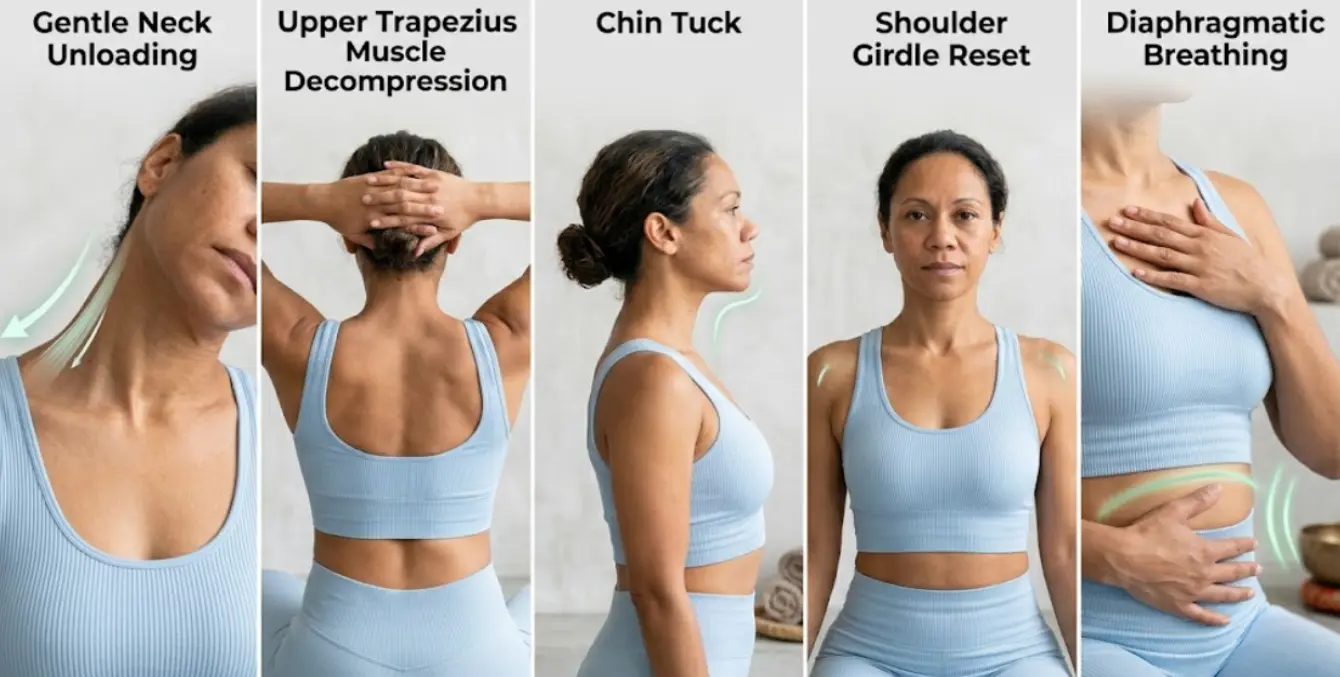
1. Gentle Neck Unloading Through Side Release
A good starting point is simply giving the neck a chance to “let go.” Sit comfortably and slowly tilt your head toward one shoulder. Don’t try to push the stretch. The goal is just to feel a light opening along the side of the neck. Keep the opposite shoulder heavy and relaxed so the neck isn’t pulling against tension.
Most people feel this area tightens after long hours of sitting or looking at screens. This is why neck stretches for pain often begin here; it’s not about intensity, it’s about letting the muscle stop holding so tightly. Even a short hold can reduce that stuck, stiff feeling that builds through the day.
2. Upper Trapezius Muscle Decompression Technique
This is the area that usually carries the most “daily load,” the top of the shoulders where stress quietly settles. Place one hand gently over your head and guide it to one side. The movement should feel supported, not forced. The opposite shoulder should stay relaxed instead of lifting. Hold it softly and breathe normally.
This helps release deep tension in the upper shoulder region, especially in people dealing with stress, neck and shoulder pain from long sitting hours, or mental stress. When this muscle stays overworked, it often feels like the shoulders are constantly raised, even at rest.
3. Chin Tuck for Postural Realignment and Neck Relief
This movement is small, but it changes a lot. Pull your chin slightly backward, like you’re aligning your head over your spine. Don’t look down or tilt up; it should feel subtle. Hold for a few seconds and release.
Most neck tension today comes from forward head posture, especially from phones and laptops. This simple reset helps take pressure off the back of the neck and supports better alignment over time. It also pairs well with neck pain stretches because it works on the cause, not just the tightness.
4. Shoulder Girdle Reset for Deep Upper Body Release
Instead of thinking of this as exercise, think of it as “dropping the weight” from your shoulders. Lift the shoulders slowly up, roll them back, and let them fall naturally. That drop at the end is the important part; it signals release.
This is one of the simplest ways to start understanding how to get rid of tension in the shoulders, especially when the body has been sitting in the same position for too long. It helps restore movement without overthinking it.
5. Diaphragmatic Breathing to Calm Muscle Guarding
Breathing has a direct link to muscle tension, especially in the neck and shoulders. Take a slow breath in through the nose and let your lower ribs expand. Then exhale slowly and fully. Keep the shoulders relaxed the whole time. When stress builds up, the body often stays slightly braced without you noticing. This is where stress in neck patterns comes from; the muscles stay partially “on,” even during rest.
Slower breathing helps the nervous system settle, which is often the missing piece when dealing with tense shoulders and neck or stress-related stiffness.
Important Note:
These techniques work best when you do them regularly, not just when pain gets bad. Muscle tension builds quietly over time, so it also needs time and consistency to release. Blending these movements with ideas from Grounding Light and Home Wellness for Everyday Energy Balance can make this process feel more complete, helping the neck, shoulders, and upper back feel noticeably lighter throughout the day.
How to Prevent Upper Body Muscle Tension
These are the simple steps to prevent upper body muscle tension:
1. Notice early signs
Shoulders slowly creeping up, or a heavy feeling in the neck, usually shows that tension is starting again. Just relax your shoulders when you notice them.
2. Don’t stay in one position too long
Long sitting hours make the body stiff without you realizing it, and research from CDC workplace musculoskeletal disorder statistics highlights how prolonged static posture is one of the leading contributors to neck and upper back strain.
Getting up or moving every 30–60 minutes helps a lot.
3. Keep your head straight
The head often leans forward during work or phone use. Gently bringing it back over the shoulders reduces pressure on the neck.
4. Slow your breathing
When stress builds, breathing gets shallow. Taking slower breaths helps the body naturally relax.
5. Therapies
Sometimes stretching and posture changes aren’t enough when tension is stored deeper in the body. A combined approach helps release that constant “held” feeling instead of only easing symptoms.
More about this approach is shared in The Power of Combining Therapies for Faster Recovery, where integrated care is shown to support more effective and longer-lasting relief.
Following these steps regularly helps reduce strain and support the release of upper-body muscle tension naturally over time.
Book Guided Therapy Sessions For Muscle Relief
How the Center for Infinite Transformation Can Help You Release Upper Body Muscle Tension
Upper body muscle tension doesn’t usually come from one single issue. It builds slowly from posture habits, stress, and daily routines, which is why it often keeps coming back even after basic stretching. That’s also the reason why understanding how to release upper body muscle tension upper body muscle tension is actually about keeping the neck and shoulders tight in the first place and working on those patterns in a simple and practical way.
At the Center for Infinite Transformation, the focus is on practical movement habits and everyday triggers that create stress neck and shoulder pain, instead of only treating the symptoms.
We help with:
Understanding posture habits that lead to neck and shoulder muscle tension.
Guided neck stretches for pain based on where your tightness is actually coming from.
Breathing work to reduce stress and release built-up tension in the upper body.
Easy daily habit changes that help prevent tense shoulders and neck from returning.
If you’ve been dealing with ongoing stiffness, recurring neck pain, or that constant feeling of tight shoulders, it’s time to address the root cause instead of repeating the same cycle.
Reach out to the Center for Infinite Transformation and start working on how to release upper-body muscle tension the right way. The sooner you begin, the easier it becomes to reset the pattern and feel lasting relief in your neck and shoulders.
FAQs
Slow neck stretches for pain, shoulder rolls, and deep breathing can quickly ease upper body muscle tension.
Yes. Stress shows up as a tight neck and shoulders because muscles stay slightly clenched.
Usually from long sitting, poor posture, and daily stress building up in the upper body.
Small movement breaks, better posture, and slow breathing help reduce tight shoulders and neck.
Yes, when done gently and regularly. The neck stretches help release stiffness and improve movement.
If the body muscle tension keeps coming back or affects your daily movement. This is high time to get proper support.