Can 528 Hz Frequency Help Clear Mental Clutter?
Our desktop screens are not the only place where we keep multiple tabs open. Our brain runs them too. Business emails, unfinished conversations, and a quiet hum of worry follow you from the moment you wake up to the moment you close your eyes. And at night, those tabs do not close; they just reload.
Over 76% of adults in America report chronic stress and mental fatigue, and most of them want one thing: a quiet place to actually exist in the present. That search has led millions straight to the 528 Hz frequency. A single tone that nudges the brain out of overdrive and into stillness.
Let's break down what it is, what the science says, when to use it, and why so many people keep coming back to it.
What Is 528 Hz Frequency?
Frequency is measured in Hertz, which simply counts the number of sound wave cycles per second. A higher number means a higher-pitched sound. At 528 cycles per second, the 528 Hz frequency sits in a low-mid range that many people describe as warm and resonant.
This particular frequency is one of what are known as the “Solfeggio frequencies”. It is a set of ancient musical tones that were historically used in sacred music, including Gregorian chants.
The 528 Hz frequency, specifically, has earned the informal nickname of the "love frequency" or the "miracle tone." This name comes from work by researchers like Dr. Leonard Horowitz.
He proposed in the late 1990s that this frequency had unique healing properties.
The broader concept of sound vibration therapy is rooted in the idea that sound, as a form of vibration, interacts with the body and nervous system in measurable ways. This is not fringe science. Music therapy is a recognized clinical field, and research consistently shows that sound affects mood, heart rate, and physiological stress markers.
Why Do People Use 528 Hz for Mental Clarity?
People do not reach for calming frequencies because they read a research paper. They reach for them because their brain feels like a browser with sixty tabs open and no way to close any of them.
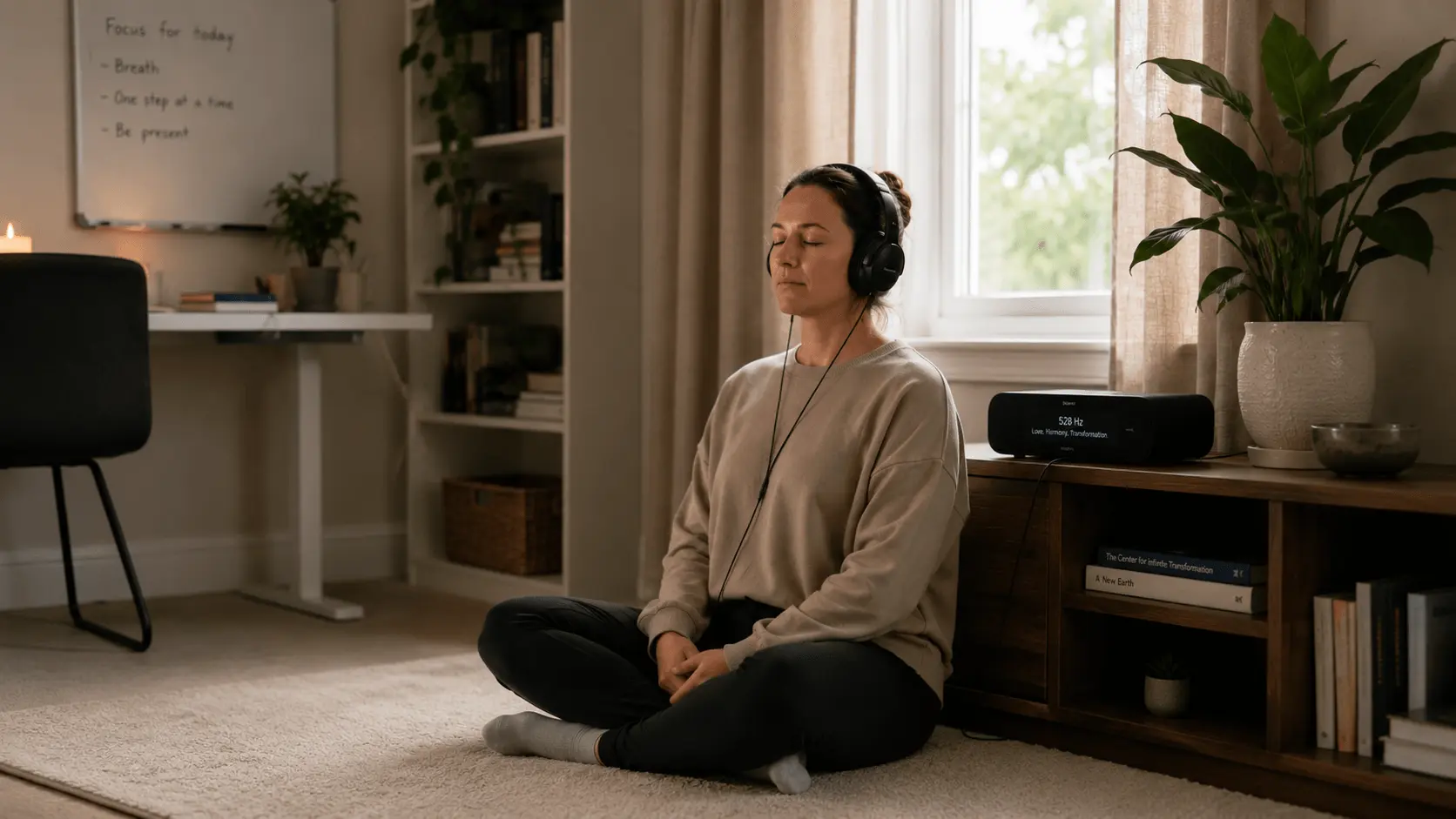
Mental clutter is a real physiological state tied to chronic stress, hypervigilance, and what researchers call cognitive load overload. When the nervous system stays in a prolonged state of activation, the brain struggles to filter irrelevant information. It makes it harder to focus, feel calm, or transition into rest.
This is where 528 Hz frequency vibes enter people's routines. Listeners most commonly report reduced racing thoughts after extended listening sessions. Many describe an easier time settling into meditation. Others notice slower, more deliberate breathing.
Can 528 Hz Frequencies Actually Affect the Brain?
528 Hz frequencies absolutely affect the brain. Music activates the limbic system, which governs emotion and memory. Rhythmic sound can synchronize neural oscillations, a process called auditory entrainment.
Slow, steady sound patterns are associated with shifts toward lower-frequency brainwave states like alpha and theta, which are linked to relaxation and calm focus.
A 2019 study published in the journal PLOS ONE found that listening to relaxing music significantly reduced cortisol levels and perceived stress in participants across multiple experimental conditions.
Some preliminary research, including a small 2018 study published in the Journal of Addiction Research and Therapy, found that 528 Hz music reduced anxiety and autonomic nervous system tension compared to regular music.
What it actually does to your brain:
Turns down the stress hormone dial
Pulls brainwaves out of overdrive
Triggers the body's built-in calm response
Loosens the grip of racing thoughts
Slows the nervous system without sedating it
The relaxation response, first described by Harvard cardiologist Dr. Herbert Benson, is a real physiological mechanism. It can be triggered by meditation, slow breathing, and yes, calming sounds. Whether 528 Hz specifically activates this response more effectively than other frequencies remains an open question.
What Does Listening to 528 Hz Feel Like?
People describe the experience in strikingly consistent ways, even though they come from completely different backgrounds and belief systems. The physical and emotional shifts tend to follow a recognizable pattern:
Tension draining from the shoulders and jaw within the first few minutes
Breathing naturally, slowing without any conscious effort
A quiet sense of groundedness as scattered attention starts pulling back inward
An emotional loosening, like something held tightly, finally getting a little more room
It is worth acknowledging that the placebo effect is real and not trivial. If a person believes something will calm them down, that belief activates genuine physiological processes. The relaxation that follows is still relaxation.
Best Times to Listen to 528 Hz Frequency
The right time is whenever your nervous system needs a break. But some moments tend to work better than others.
528 Hz vs Other Popular Healing Frequencies
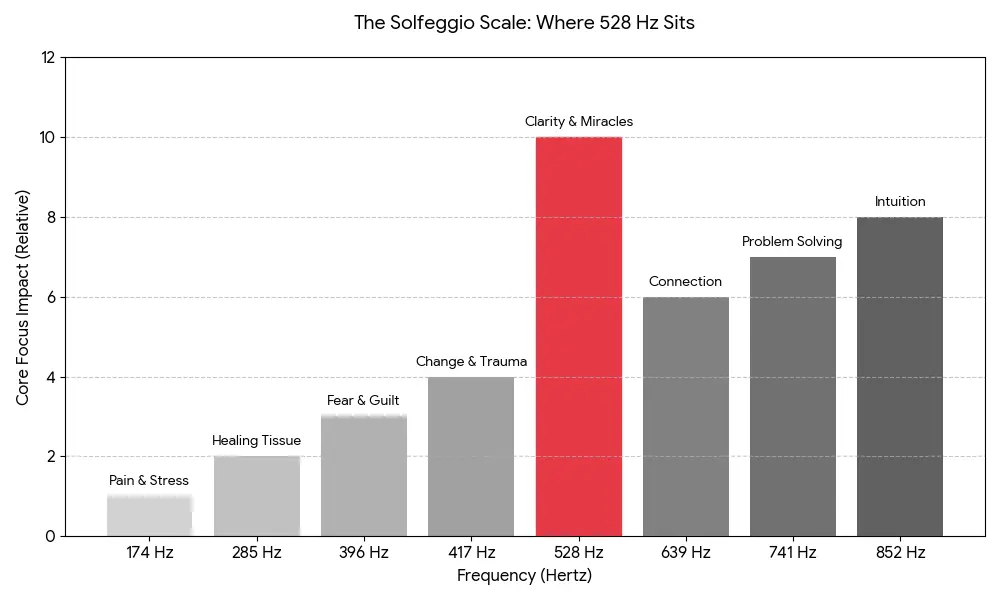
While 528 Hz is often the "go-to" for mental clarity, it is part of a larger family of Solfeggio frequencies. Each one targets a different aspect of the human experience. If 528 Hz is the tool for "Miracles and Clarity," the others act as supporting players for different emotional and physical needs.
Is There Scientific Proof That 528 Hz Frequency Clears Mental Clutter?
Yes, 528 Hz frequency clears mental clutter. Its waves affect hormones, heart rate variability, and brain activity that shift the mood. Rhythmic sound reduces the activity of the default mode network, the brain region responsible for rumination and mind-wandering.
A study in Frontiers in Psychology found that music-induced relaxation reduced salivary cortisol by an average of 12% compared to silence or non-relaxing music. That is a meaningful shift in the body's primary stress hormone.
For those exploring sound healing for stress reduction, the most evidence-supported approach is simply this: use calming sound intentionally, consistently, and as one part of a broader stress management approach.
Simple Ways to Try 528 Hz Yourself
You do not need special equipment or a particular belief system to start. Here is what works for most people.
Start with a nightly ritual. Choose a 528 Hz frequency track, ideally 15 to 20 minutes long, and listen before sleep without screens. Pair it with slow, deliberate breathing:
Inhale for four counts
Exhale for six
Repeat for at least five cycles before letting your mind fully release
This combination activates the parasympathetic nervous system more effectively than either practice alone.
Final Thoughts: Why 528 Hz Frequency Resonates With So Many People
The popularity of the 528 Hz frequency is not really just about a number. It is about what people are carrying.
We live in a time of extraordinary cognitive demand. The average adult makes around 35,000 decisions per day, according to researchers at Cornell University. The average person checks their phone 96 times daily. Sound offers something rare: a passive invitation to stop. You do not perform, schedule, or optimize it. You listen. And for a few minutes, the tabs close.
If you are looking for a comprehensive, professionally guided sound-healing experience, the Center for Infinite Transformation offers a range of services for those seeking more than background music. The center's approach integrates sound, somatic awareness, and nervous system education in a format designed for people navigating real stress, not just those seeking ambiance.
FAQs
Many listeners report genuine reductions in mental tension, easier meditation, and improved emotional calm. The specific effects of 528 Hz compared to other calming audio are not yet conclusively proven by science
General sound therapy and music-based stress relief have strong scientific support. The specific claims made about 528 Hz, such as DNA repair or guaranteed healing, are not supported by peer-reviewed research.
Many people use 528 Hz as a supporting tool for managing anxiety symptoms. One small study found reduced autonomic nervous system tension with exposure to 528 Hz. Combined with breathing practices and other stress relief techniques, it can support a broader anxiety management approach.
With consistent daily use, many listeners report a gradual reduction in baseline tension, better ability to fall asleep, and a quieter mental baseline over several weeks. Results vary by person and are influenced by how it is used.
Some listeners find it easier to concentrate during low-demand work while 528 Hz audio plays in the background. Its calming quality can reduce the mental noise that competes with attention.