Sound Baths, Music Therapy, and Sound Vibration Therapy for Healing The Body
Every organ in our body is constantly moving, responding, and communicating through rhythm, sound, and vibration. When that natural rhythm feels disrupted, it shows up as stress, tension, or emotional imbalance that we can’t always explain in words.
Most people already experience how powerful sound can be in everyday life. Even a song can instantly shift a mood or bring calm during anxiety. Actually, a sound can also be used more intentionally to support the mind and body.
This is where practices like sound baths, music therapy, and vibration-based healing come in, including sound vibration therapy, which focuses on how frequency and vibration interact with the body’s natural state of balance.
What Is a Sound Bath and How Does It Work?
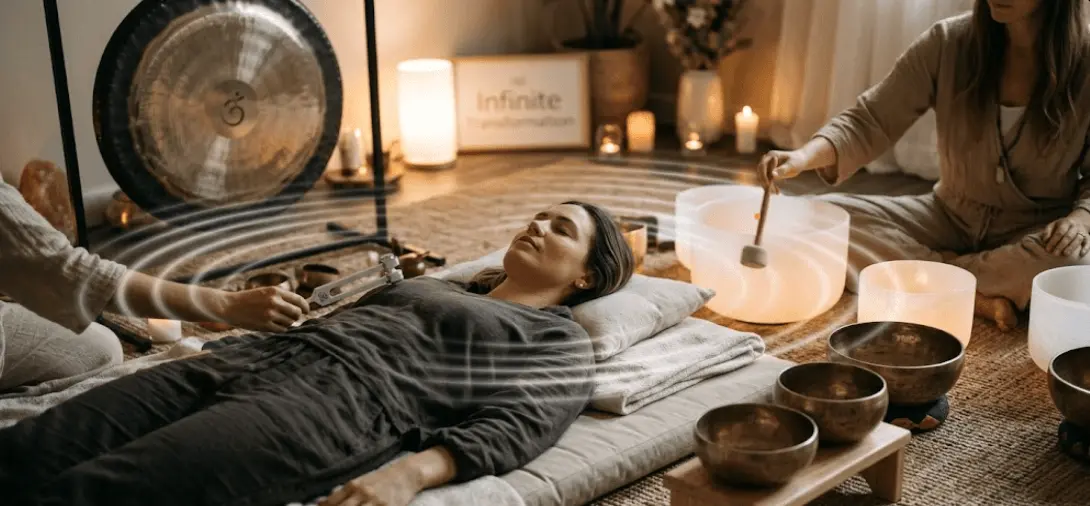
A sound bath is one of those experiences that’s hard to fully understand until you’ve actually been in it. There’s no talking, no movement, no effort involved. You simply lie down, close your eyes, and let sound fill the space around you. One of the main reasons people explore sound-based practices is stress.
In fact, sound healing for stress reduction has become one of the most common ways people try to calm an overactive mind and support a more balanced nervous system. Through instruments like singing bowls, gongs, and tuning forks, the body is guided into a slower and more grounded state without effort, as explored in research on therapeutic effects of singing bowls.
What people don’t expect is how quickly the mind responds. Instead of trying to relax, you almost “drop into it” without even realizing it. This is explained through sound frequency healing, where vibration interacts with the body’s natural rhythm and encourages a slower, more settled state. It’s also one of the reasons sound baths are closely linked with broader sound healing practices and calming techniques used for stress and emotional overload.
Benefits of Sound Baths
There are many benefits of a sound bath that people notice in simple, everyday ways when their body and mind finally get a chance to slow down.
Stress feels a little lighter as the body naturally relaxes
The mind becomes quieter, with less overthinking
Sleep starts to feel deeper and more restful
Emotions feel easier to release instead of being held inside
The body feels calmer, grounded, and at ease
Sometimes, all it takes is giving yourself space to truly switch off and just receive.
What Is Music Therapy and How Does It Work?
Music therapy sounds simple at first, but it becomes clearer and more meaningful when you experience it. It’s not just music playing in the background. It’s a more intentional use of sound waves to improve mental and emotional health.
Sometimes it’s just listening to specific types of music that help settle the system. Other times it can involve rhythm, guided sound experiences, or simple activities that gently bring attention back to the present moment. There’s nothing to “get right” here. No pressure to respond a certain way. It’s more about allowing sound to do its thing.
What’s interesting is how naturally the body reacts. There’s no thinking involved; the nervous system just responds. A change in rhythm or tone can slowly shift the internal state without any effort. Over time, things can start to feel a bit less chaotic, like the mind is finally getting space to slow down.
This is why music therapy is also included in approaches for sound therapy for anxiety, especially when the goal is to calm mental overload and bring a sense of balance back into the system.
Benefits of Music Therapy
The effects aren’t usually instant or dramatic. It’s more subtle than that. Things just start to ease a little at a time. Some people notice:
Less mental tension and overwhelm
A more settled emotional state
Easier release of feelings that were stuck
Better focus when the mind feels scattered
Moments where things finally feel lighter
It’s less about trying to fix anything and more about giving the body and mind a chance to settle on their own. Over time, music therapy often becomes part of a wider sound healing approach that supports emotional balance and helps the nervous system come back to a calmer baseline.
What Is Vibration Therapy and How Does It Work?
Vibration therapy is a gentle, body-based approach that uses subtle frequencies or mechanical vibrations to influence how the body feels and responds. These vibrations can come from specialized equipment or from more traditional tools like tuning forks and low-frequency sound instruments.
At a basic level, it’s built on a simple understanding that the body is never truly still. Even when we are resting, everything inside us continues to move in small rhythms. When external vibration is introduced, the body naturally starts to respond to it. Muscles may loosen, areas of tension begin to soften, and the nervous system gradually shifts into a calmer state without any conscious effort.
Most people don’t experience vibration therapy as something intense or overwhelming. It’s usually quiet, steady, and subtle. There’s nothing to “do” during a session; the body simply receives the vibration and reacts in its own way. Over time, this can help release built-up stress, especially in areas where the body tends to hold tension.
Because of this, vibration therapy is often included in broader sound vibration therapy practices, where sound frequencies and physical vibration work together to support relaxation and overall balance.
Benefits of Vibration Therapy
Some simple, commonly felt benefits include:
Muscles start to relax, especially in areas where stress builds up
The body feels lighter and less tight after a session
It becomes easier to feel calm and settled inside
Stress in the body slowly reduces over time
The mind feels a bit quieter because the body is more relaxed
For many people, it’s not a dramatic change. It’s more like the body finally gets a chance to slow down and breathe properly again.
Sound Bath vs Music vs Vibration: Which Therapy Is Right for You?
Most people don’t start looking into sound-based therapies because they already understand the difference between them. It usually begins with a feeling, stress that doesn’t fully go away, sleep that feels light, or a mind that stays active even when the body is tired. In moments like these, the focus is less about choosing the “right category” and more about finding something that actually helps the system slow down and feel normal again.
While music therapy and vibration-based methods each have their own purpose, many people naturally lean toward a more blended experience when they feel mentally and physically overwhelmed. This is where integral sound healing becomes especially effective.
At Center For Infinite Transformation, sound bath is designed as a full immersive experience that brings together calming frequencies, gentle vibrations, and deeply relaxing soundscapes in one session. It supports the nervous system in a natural way, helping the body release tension, quiet mental noise, and move into a state of deep rest, making it a simple and powerful choice for anyone looking for relaxation and overall balance.
Final Thoughts
Sometimes it’s not easy to explain, but you can feel when your body is just not fully resting. Sleep doesn’t feel deep; the mind keeps running in the background, and even on quiet days, there’s still a sense of tiredness that doesn’t go away. A lot of people go through this without realizing it’s actually a sign that the nervous system is overloaded and needs a different kind of rest.
This is where sound vibration therapy can really make sense. Instead of trying to “fix” anything, it simply gives your body space to slow down through sound, rhythm, and gentle vibration. For many people exploring sound healing in San Antonio, it becomes a gentle way to step away from constant mental noise and finally feel grounded again.
At the Center For Infinite Transformation, Integral sound healing sessions are designed to help you relax deeply, release built-up tension, and leave feeling calmer and more balanced.
FAQs
Yes, it’s safe for most people. It’s very gentle and doesn’t involve anything intense. You’re just listening and relaxing.
You can wear something comfortable. Loose clothes help you relax better and not feel distracted.
No, you don’t need any experience. You just come, lie down, and listen.
Most sessions are about an hour. Some may be a little shorter or longer.
Yes, that’s normal. Many people fall asleep because their body finally relaxes.
Meditation usually needs focus. Sound healing helps you relax with sound, so it can feel easier.
You don’t need to do much. Just come relaxed and be open to the experience.